
Crossover Heat Pumps for Portland Oregon
A Carrier crossover heat pump gives you mini-split efficiency and whole-home ducted comfort in one system. For many Portland homes, that means adding quiet, efficient heating and air conditioning without tearing out the furnace you already have.
If you have ducts but no AC, an aging heat pump, or a side yard too narrow for a big outdoor unit, this guide is for you. We’ll cover what “crossover” means, which Carrier models are in the lineup, and how to tell if one fits your home.
What is a crossover heat pump?
A crossover heat pump uses a ductless-style outdoor unit to run a traditional ducted system. Carrier describes its Crossover Solutions as combining the strengths of ductless and ducted equipment in a single system.
Three things set it apart from a conventional heat pump:
- Inverter-driven, variable-speed compressor. It ramps up and down to match the load instead of cycling fully on and off. That means steadier temperatures and fewer big swings.
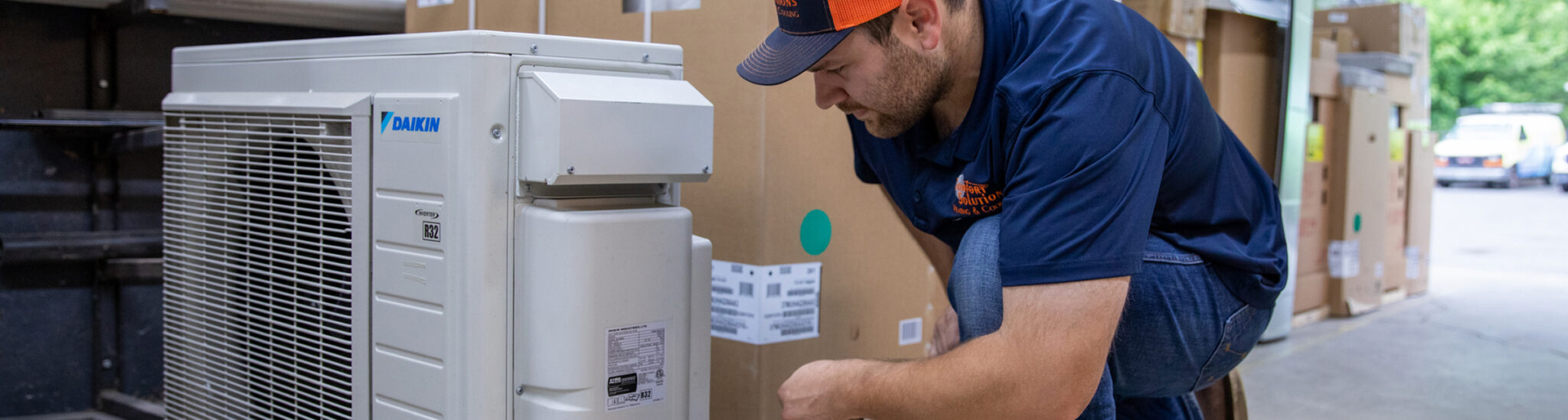
- Compact, side-discharge outdoor unit. It blows air out the side like a mini-split, not up through the top. The cabinet is slim enough to sit close to the house, on a roof, or stacked.
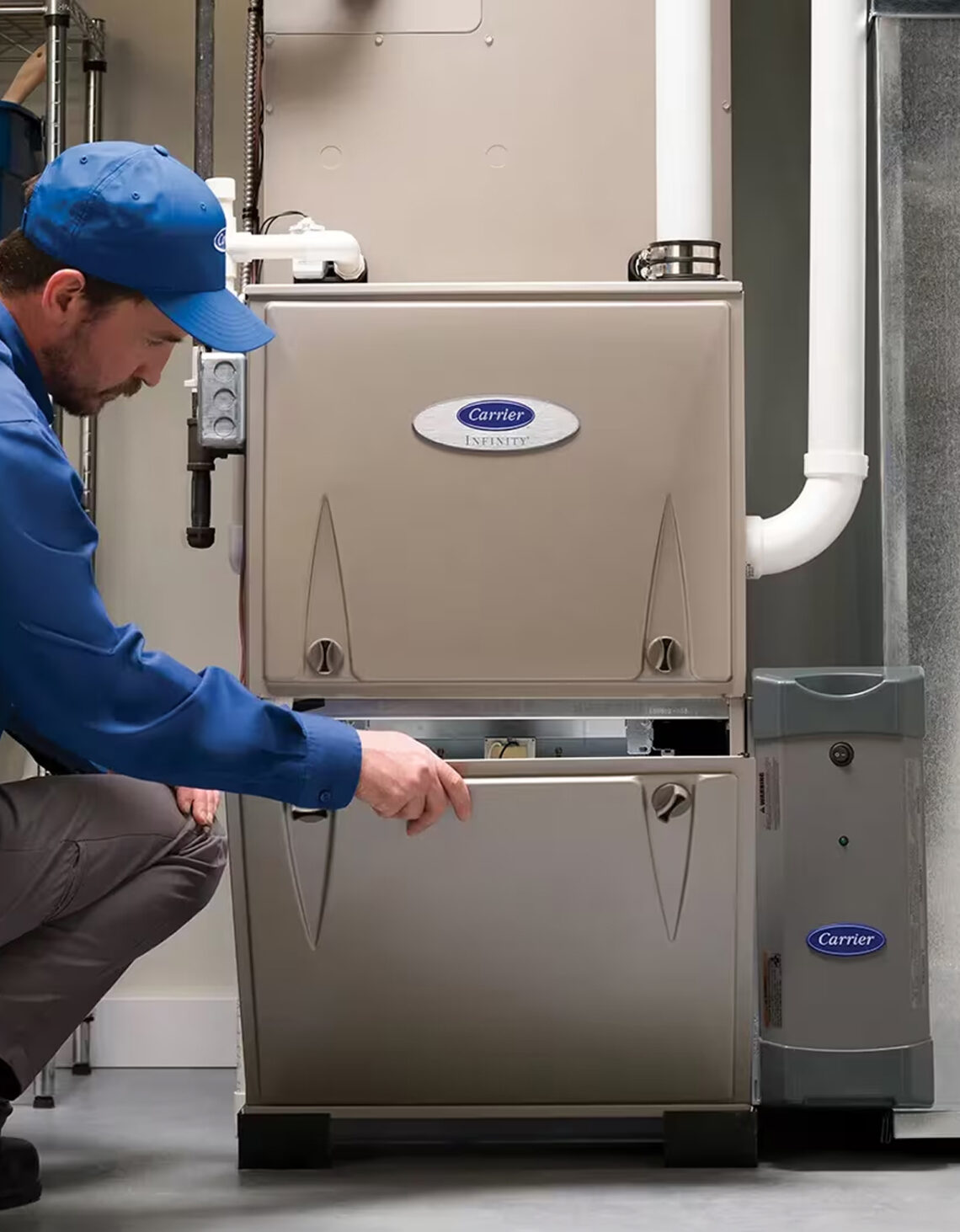
- Works with your ductwork. It connects to a Carrier fan coil (air handler) or to a coil on top of your existing gas furnace, so every room with a vent gets conditioned air.
In short: the efficiency and quiet of a mini-split, delivered through the ducts you already have.
Why crossover systems fit Portland homes.
Portland’s climate is close to ideal for a heat pump. Most of our winter is mild and damp, which is right where a variable-speed heat pump does its most efficient work.
- Summers are getting hotter. Heat waves and wildfire smoke keep windows shut in July and August. A crossover system adds real central AC through your existing vents.
- Many homes already have a gas furnace. A crossover coil can go on top of it, so you gain cooling and efficient heat pump heating without replacing a furnace that still has life left.
- Tight side yards. Close-in neighborhoods often have only a few feet between houses. A slim unit that can sit 4 to 6 inches from the wall is much easier to place than a bulky traditional condenser.
- Neighbors are close. Sound levels down to 55 to 59 dB at low speed are friendlier to bedrooms, patios and the house next door.
- ADUs, condos and plexes. Stackable outdoor units and a wall-mounted fan coil make crossover practical where space is scarce.
Dual fuel or all-electric?
You can set up a crossover system two ways. The right choice depends on what you have now and where you want to go.
With dual fuel, the thermostat decides when to switch from the heat pump to the furnace. We set that switchover point based on your home and your gas and electric rates, so you get the cheapest heat on any given day.
Going all-electric? The Performance 19 is rated to operate down to -22°F, well below anything Portland typically sees. Proper sizing still matters so the heat pump carries the load on our coldest nights.